


Environmental Law at a Turning Point
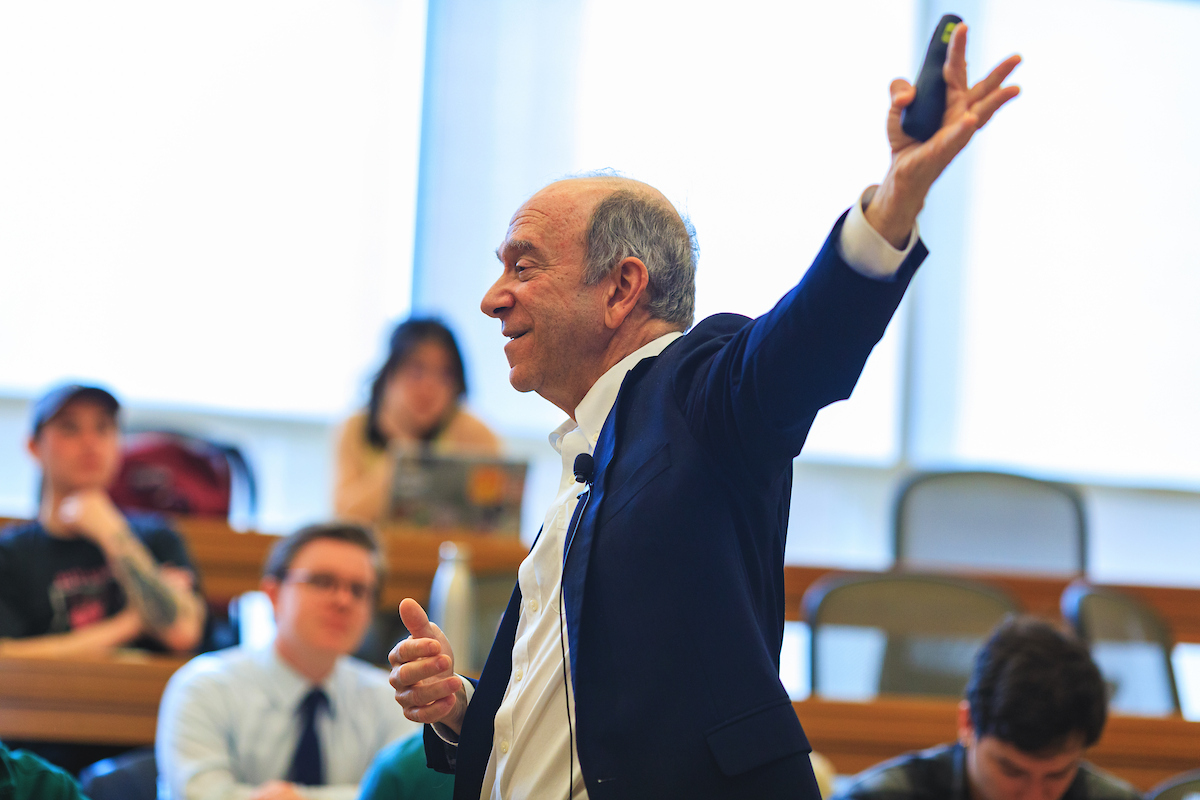
Richard Lazarus, the Charles Stebbins Fairchild Professor of Law at Harvard Law School, discusses teaching environmental law amid sweeping executive actions, major Supreme Court decisions, and unprecedented challenges to climate protections.
Environmental law has changed dramatically over the past two years. How has that changed how you teach your courses?
The only constant in environmental law is that it’s always changing. Anyone teaching environmental law has never been able to rely on last year’s notes. The pace of change has accelerated significantly during the past twenty years in the wake of a series of presidential administrations advancing environmental law agendas vastly different from the preceding administration.
However, the combination of the second Trump administration and the current Supreme Court has raised the stakes to an unprecedented level. Together they threaten to dismantle not only the most vital federal pollution control laws but the constitutional foundations of environmental law.
An environmental course must respond to this historic moment in environmental law by pinpointing the major changes the executive branch is making to existing law — now subject to litigation — and devoting more attention to constitutional law.
Have recent court decisions or executive actions become central to your teaching?
Yes. A lot. Front and center are the Trump administration’s actions to eliminate federal laws relating to climate change, especially under the Clean Air Act. Also notable are recent actions by the administration to narrow the geographic scope of the Clean Water Act’s restriction on discharges of pollutants into the waters of the United States. Finally, the current administration has effectively repealed the National Environmental Policy Act, long described as the nation’s Magna Carta of environmental law.
For each of these topics, teaching environmental law must focus on how the Supreme Court is enabling these major changes.
There is no better time to study and practice environmental law than right now. The stakes could not be higher.
What questions do you think will define environmental law over the next few years?
This is hardly the first major effort to cut back significantly on the essential protections long provided by the nation’s environmental laws. In the past, such efforts have failed. And environmental law has responded by becoming stronger and more demanding than before. Each time its obituary has been written, it has proved resilient.
The current challenge is clearly the most serious environmental law has ever faced, with the ability to respond effectively to the threat of climate change at stake. And its ability to prove resilient yet again will define the future of environmental law in our nation.
If a prospective student is wondering whether now is the right time to study environmental law, what would you tell them?
There is no better time to study and practice environmental law than right now. The stakes could not be higher. If you want to be an environmental lawyer doing important work, this is your time. The nation — indeed, the world —needs you more than ever.
If you care about these issues, you cannot let your related worries knock you out. Bounce back, face the issues, and do the important work necessary to develop, defend, and enforce the most effective environmental laws possible.
It will require great skill and enormous resilience. What an extraordinary opportunity.